

How to Insulate Your Business from Severe Downtime Using a Disaster Recovery Plan
What is a Disaster Recovery Plan?
Implementing a structured disaster recovery plan provides an enterprise with a documented, step-by-step framework to rapidly restore IT operations and communications following an unexpected system outage. Rather than a simple file backup utility, it serves as a highly synchronized operational strategy that unifies cloud replication networks, database integrity policies, and technical staff protocols.
Deploying this systematic framework ensures that when hardware crashes, ransomware attacks, or local power outages strike, an organization can maintain business continuity with minimal data loss.
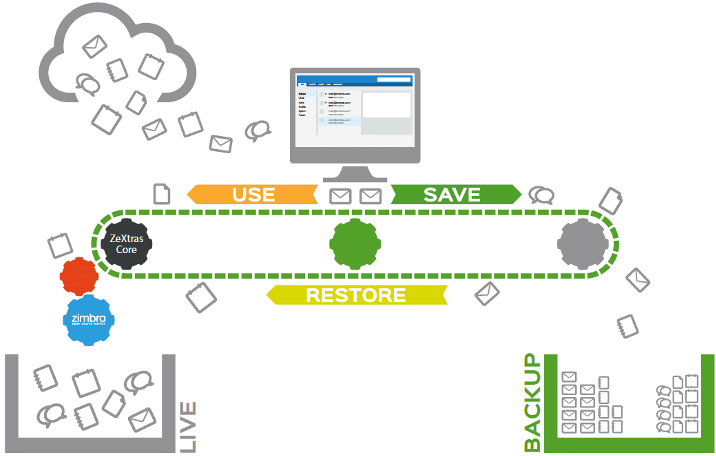
The Core Mechanics / Framework
An enterprise-grade recovery framework operates beyond basic data storage duplication. The system depends on specific, interconnected technical matrices to guarantee complete site restoration:
- Real-Time Synchronous Replication: The infrastructure utilizes atomic, split-second algorithms to replicate server data events—such as live mail flows within Zimbra or Microsoft 365—the exact instant a change occurs.
- Granular Recovery Point Objective (RPO): This technical metric defines the maximum age of files that an organization can afford to lose from its primary storage nodes during an active system disruption.
- Targeted Recovery Time Objective (RTO): This metric maps out the strict chronological duration limits within which an enterprise network, data center, or mailbox server must be fully functional.
- Multi-Tiered Failover Routing: When a primary hardware stack fails, automated proxy scripts instantly redirect incoming net
- Isolated Sandbox Testing Matrices: The framework supports non-disruptive dry runs and full parallel processing simulations to verify data validation without altering live corporate database workloads.
Benefits of Disaster Recovery Plan
Continuity
A backup and disaster recovery planning ensures businesses can quickly get back on their feet after a disaster, maintain employee productivity and its ability to generate revenue.
Reputation
Downtime can cause more than just a financial drain on the business, partners and customers could lose trust in a business if it cannot meet basic obligations due to downtime.
Loss
Customer need to communicate with email efficiently but competitive pressure and downtime could jeopardize business by customers moving to competitors.
Compliance
Email recovery solutions ensures organizations do not have to worry about compliance violations and legal issues related to email data loss and downtime.
Why This Matters to Malaysian Corporations
1. Enforcing Structural Compliance with Malaysia’s PDPA Regulations
Data exposures caused by unexpected infrastructure failures expose companies to significant legal vulnerabilities under regional regulatory panels. Operating a locally anchored disaster recovery plan ensures that historical client message archives and employee transaction histories are securely replicated inside secure data centers within national boundaries. This explicit data residency control directly fulfills the compliance requirements established by Malaysia’s Personal Data Protection Act (PDPA).
2. Neutralizing Regional Infrastructure Risks and Power Outages
Commercial centers throughout Selangor and Kuala Lumpur face regular infrastructure strains, ranging from unexpected localized power grid failures to lightning-induced hardware burnouts. Integrating an offline-ready disaster recovery plan backed by resilient systems like TrueNAS or Acronis Cloud ensures your operations remain safe. If your physical office suffers a complete blackouts, your critical business architectures remain alive and accessible via secondary private cloud networks.
3. Protecting Brand Reputation by Eliminating Unplanned Service Gaps
Extended service outages quickly erode customer trust and can lead to costly contractual penalties from unmet Service Level Agreements (SLAs). Utilizing a centralized disaster recovery plan allows technical teams to restore missing items, specific database schemas, or full communication lines with single-click execution. This protective capability minimizes consumer-facing friction and keeps your organization running reliably while competitors struggle with data losses.
Secure Your Digital Estate with Cloudhappen
Safeguarding enterprise infrastructure from unpredictable disasters requires a dedicated engineering partner with extensive local experience. Cloudhappen Global Sdn Bhd, operating from Kuala Lumpur, Malaysia, specializes in designing, deploying, and maintaining resilient business hosting and backup networks.
Whether your enterprise requires an active disaster recovery plan, a bare-metal storage migration, or a protected hybrid bridge to Microsoft 365 (M365) environments, our team delivers seamless business continuity. Contact our technical office in Malaysia today to protect your corporate assets from unexpected downtime.
FAQ on Disaster Recovery Plan
What is the main structural difference between standard file backup and a disaster recovery plan?
A file backup simply saves historical copies of data onto secondary storage volumes. In contrast, a disaster recovery plan outlines the exact technical infrastructure, system failovers, personnel duties, and software tools needed to restore full operational services rapidly during a crisis.
How many restoration types are available during data system emergencies?
The architecture supports six distinct recovery configurations, enabling technical teams to run granular extractions ranging from a single mistakenly deleted user asset to a complete, top-level domain restoration.
Can these frameworks safeguard email databases from accidental employee deletion?
Yes. Because the backend engines capture system changes with split-second precision, administrators can utilize localized recovery points to instantly extract and restore individual historical accounts to their exact state before the deletion occurred.
Disaster Recovery
Business Operation can be at risk if a disaster happens. Likewise disaster can happen any time, anywhere. Therefore causing unnecessary downtime and data lost. For this reason disaster recovery need to be in place.
What is Disaster Recovery
Disaster recovery is a plan to minimize downtime as a result of hardware or software failure. Therefore it is an important task for companies. Thus, it is also an important part of the business process to recovery in the shortest time. Sometimes important Email where accidentally deleted from the systems due to many factors. Therefore a disaster recovery comes in place to handle such situation. In other word tools and software are required to perform data recovery of the deleted Email.
Zimbra Backup and Restore
Zimbra’s realtime backup and restore backup every single items and event on your server with split second precision. Backup happens as soon as any changes is made in the system. As a result avoiding data loss by using atomic and ever-consistent algorithms. There are six restore modes available to recover what you need from a single item to and entire domain.
Benefits of Disaster Recovery Plan
Continuity
A backup and disaster recovery planning ensures businesses can quickly get back on their feet after a disaster, maintain employee productivity and its ability to generate revenue.
Reputation
Downtime can cause more than just a financial drain on the business, partners and customers could lose trust in a business if it cannot meet basic obligations due to downtime.
Loss
Customer need to communicate with email efficiently but competitive pressure and downtime could jeopardize business by customers moving to competitors.
Compliance
Email recovery solutions ensures organizations do not have to worry about compliance violations and legal issues related to email data loss and downtime.
Zimbra Cloud
Hassle free Zimbra email for immediate deployment for your business without the need to worry about server maintenance and operational cost.
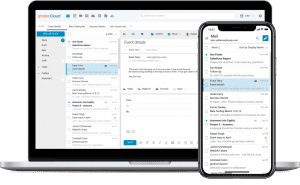
Zimbra Cloud … email plus all your favorite apps and functionality. Everything you need is built-in OR launch Zoom, Dropbox, Slack, Webex +++. All just one click away!

Author